






























How Much Do You Know About Container Terminal Slot Positions?
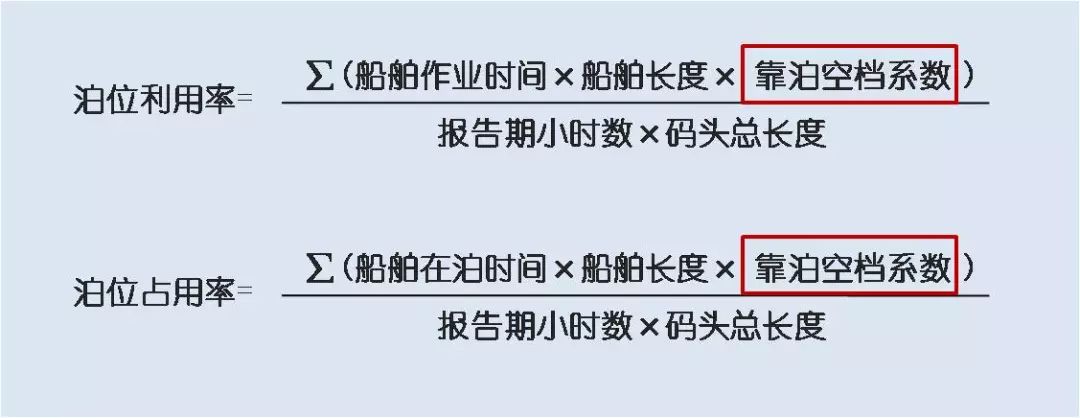
Let's look at an example:
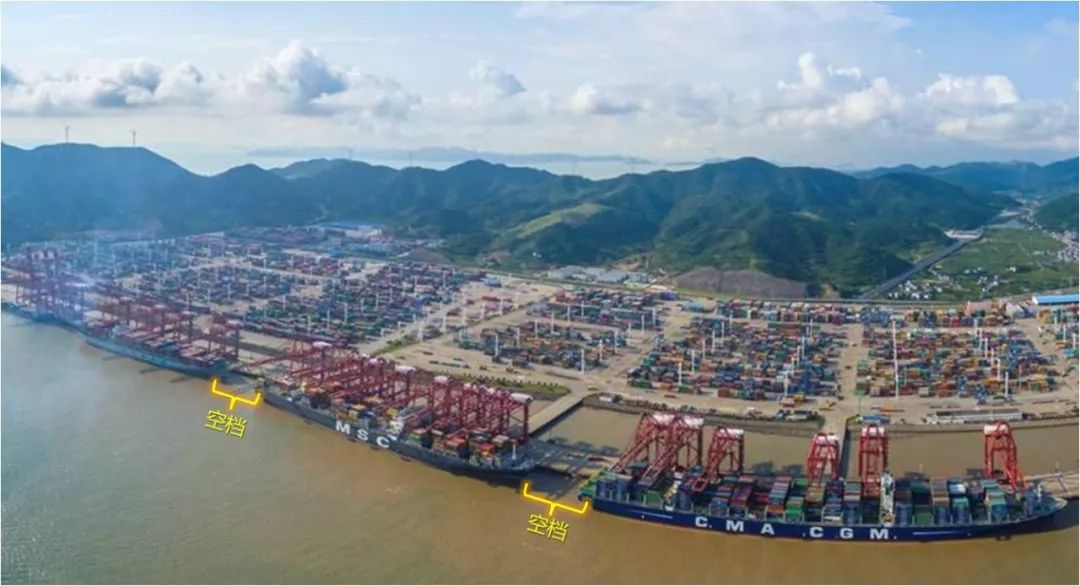
Alright, let's get down to business and dive into the main topic~
Working at a "ten-million TEU" single container terminal, you've surely seen scenes like this many times:
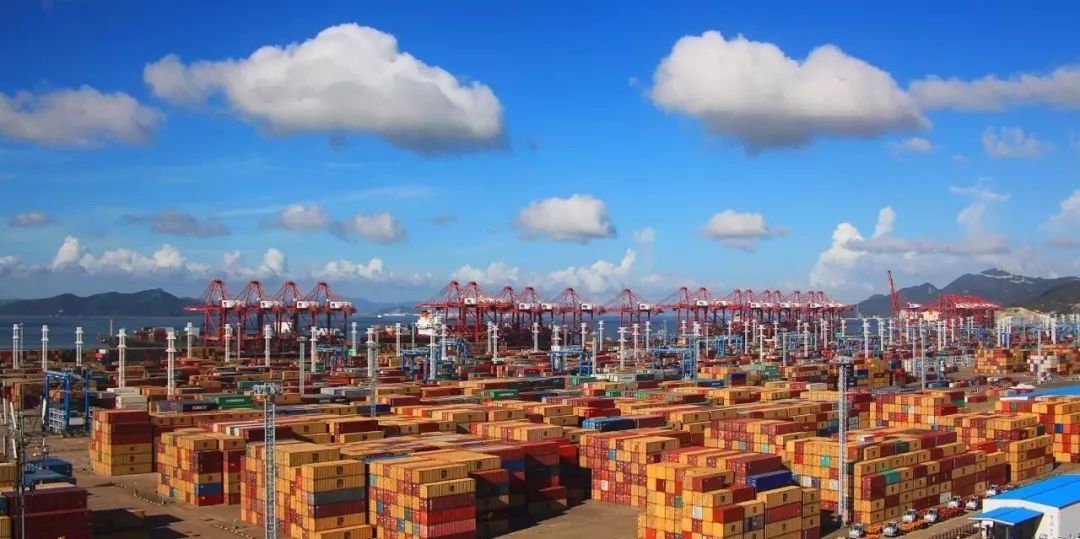
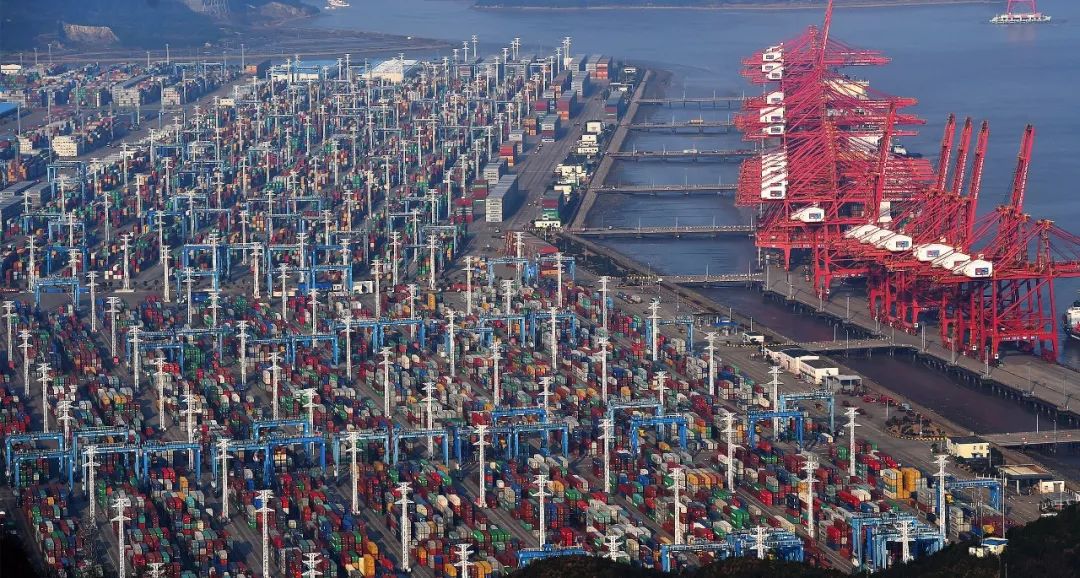
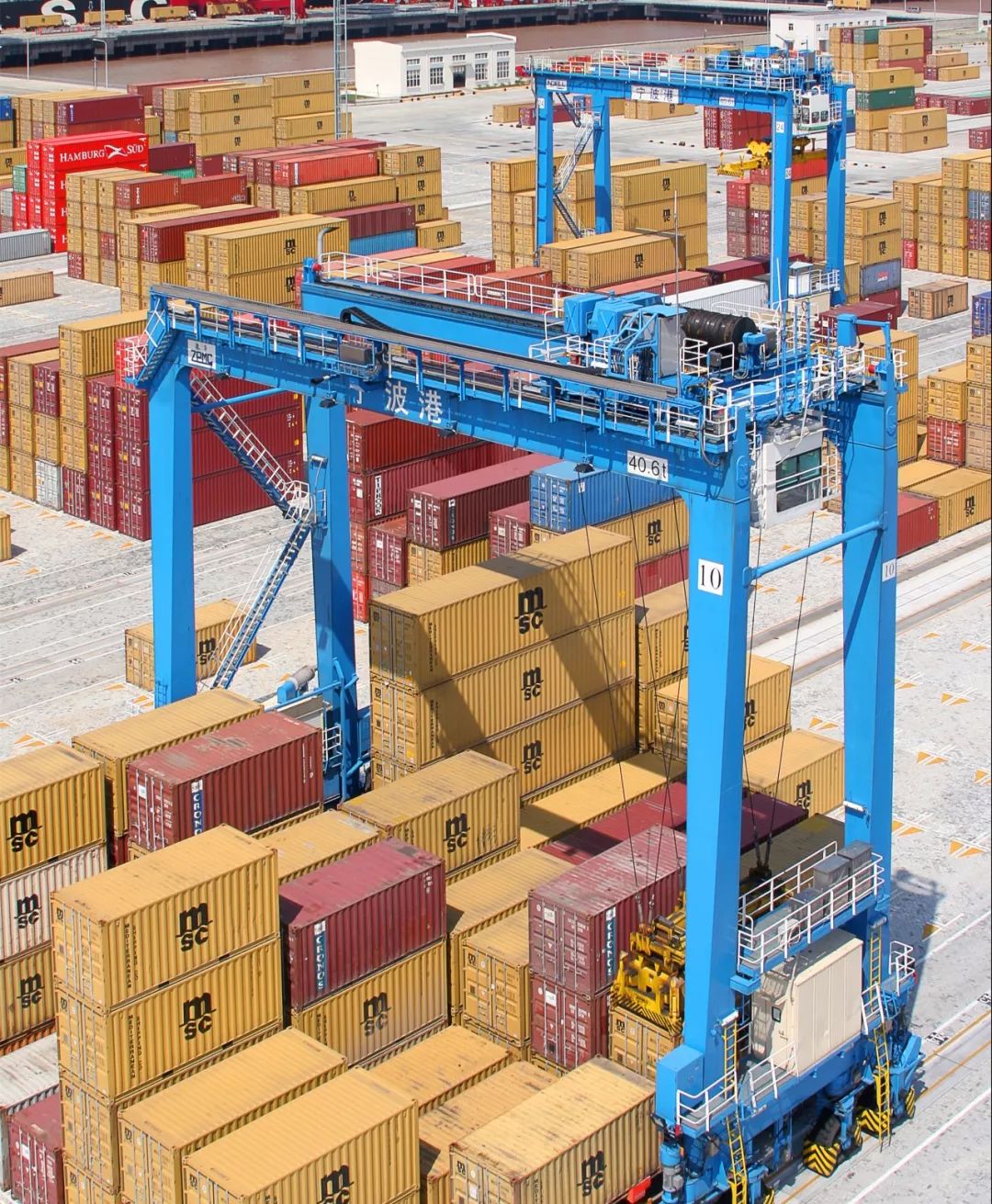
Step 1: Divide the entire yard into "Areas"
Based on the berth sequence, each berth corresponds to one area. For example, Berth 1 corresponds to Area 1, Berth 2 to Area 2, and so on. Here's an illustration:
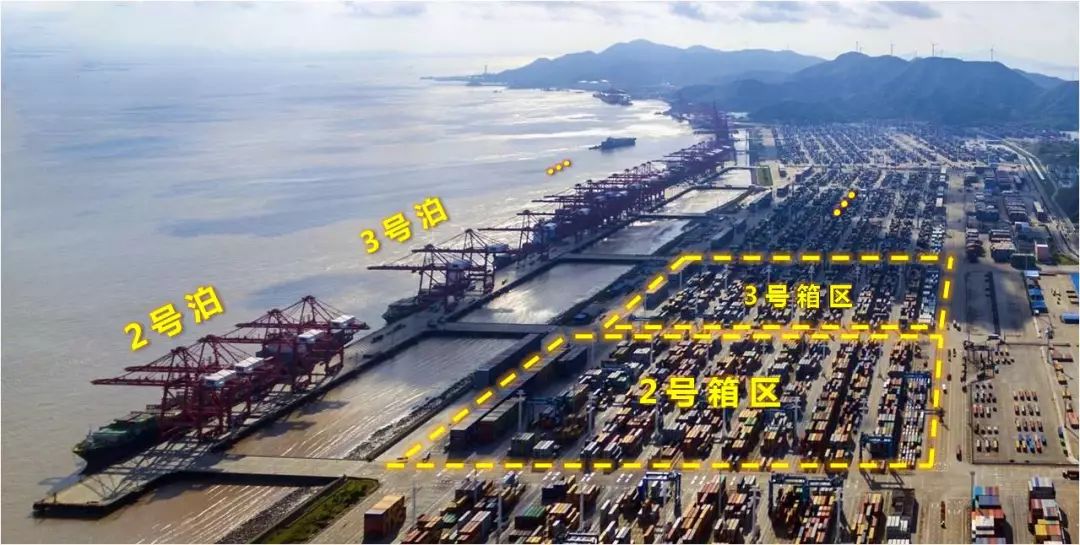
Step 2: Each area is further divided into "Blocks"
For instance, in Area 5, following the order from seaside to landside, the blocks are labeled 5-1, 5-2, and so on. If you reach the 10th block and there are still more, continue with 5-A, 5-B, etc.
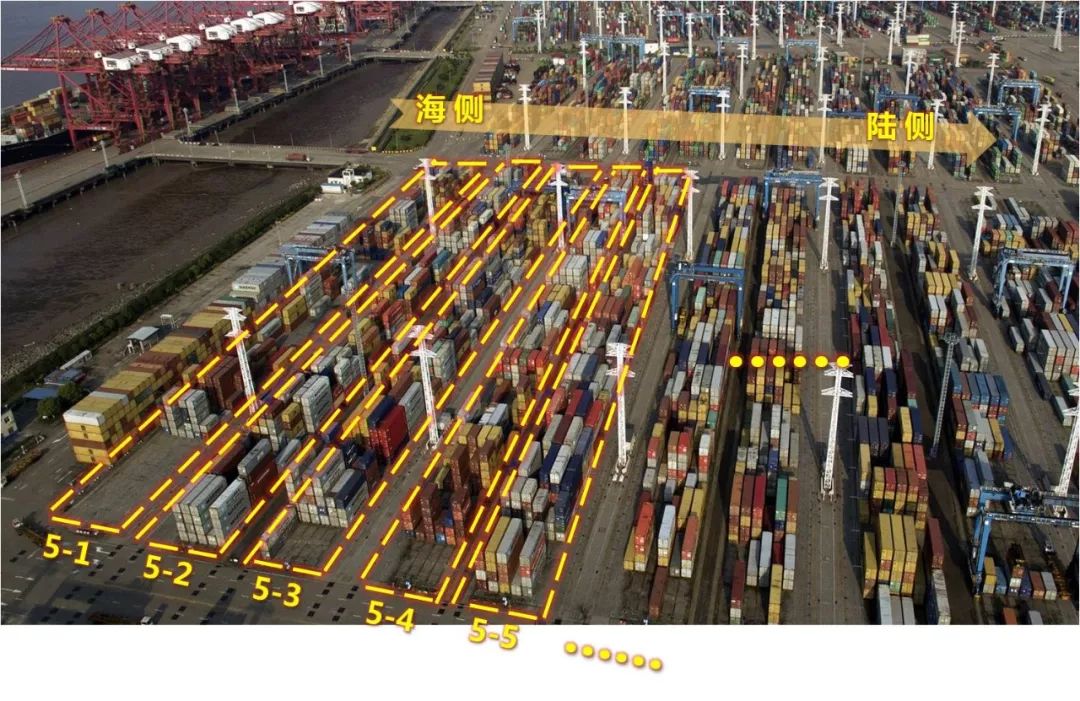
Step 3: Each block is further divided into "Bays"
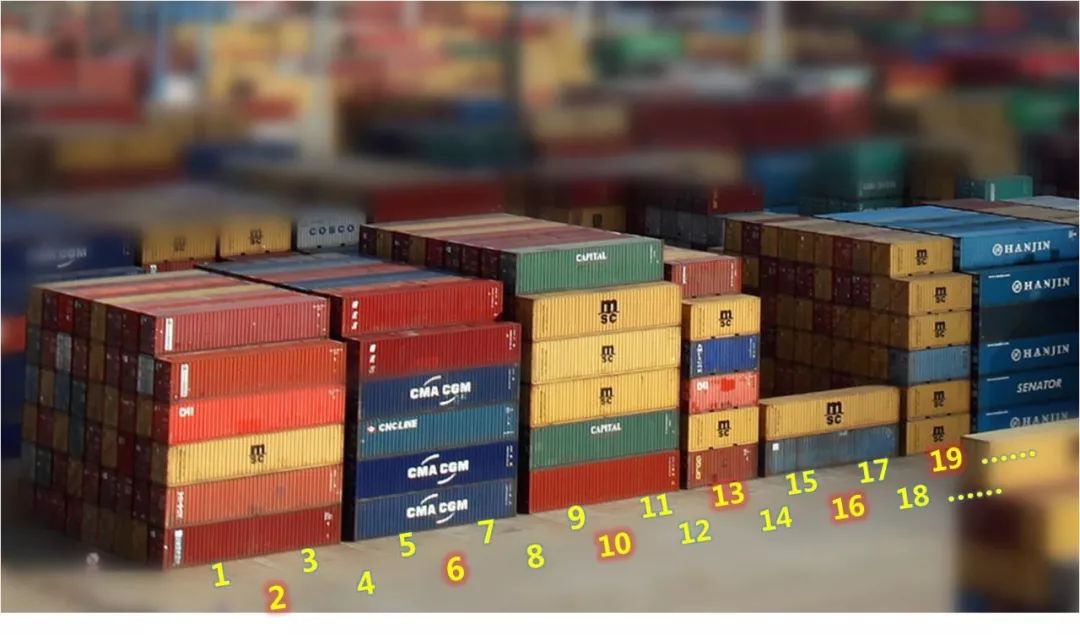
Step 4: Each bay is further divided into "Rows"
Each bay typically has 6 rows, numbered 1, 2, 3, 4, 5, and 6 starting from the lane side. Let’s look at a single bay of containers:
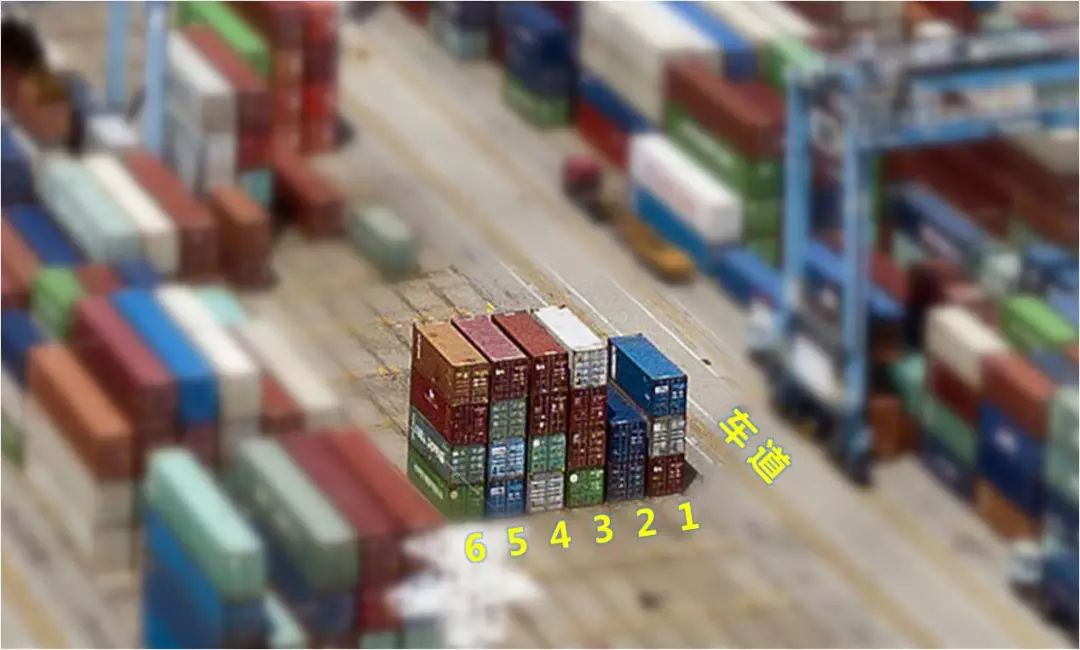
Step 5: Each row is further divided into "Tiers"
In English, it's called "TIER," usually consisting of 4 to 5 layers. From bottom to top, they are numbered 1, 2, 3, 4... Take another look at the same bay:
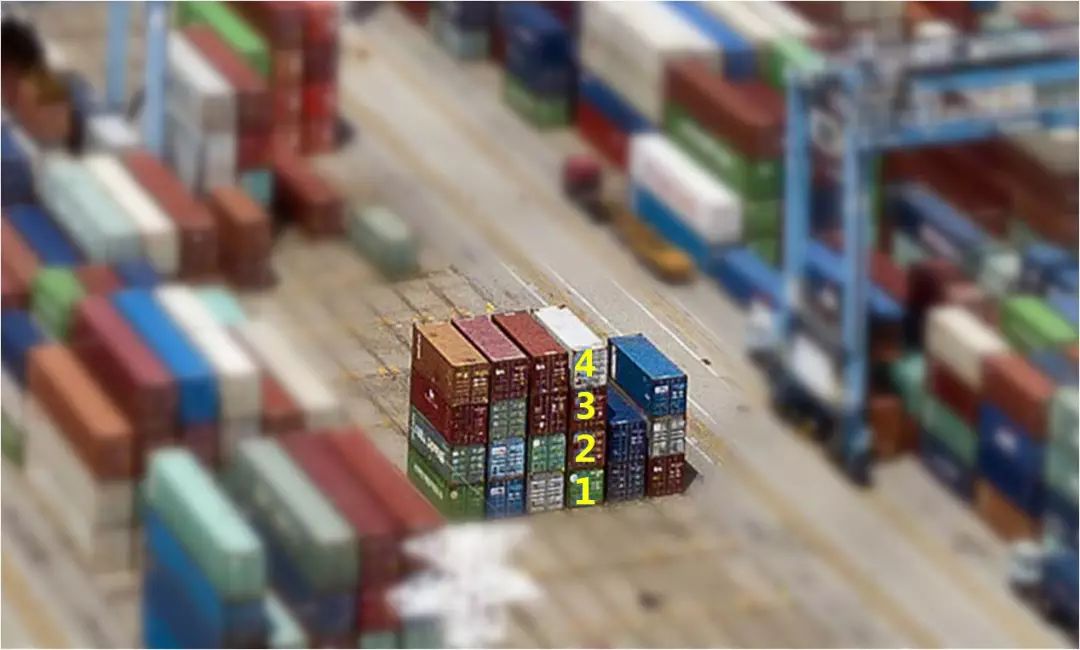
How’s that? Got it? Here’s another diagram to help you review and reinforce:
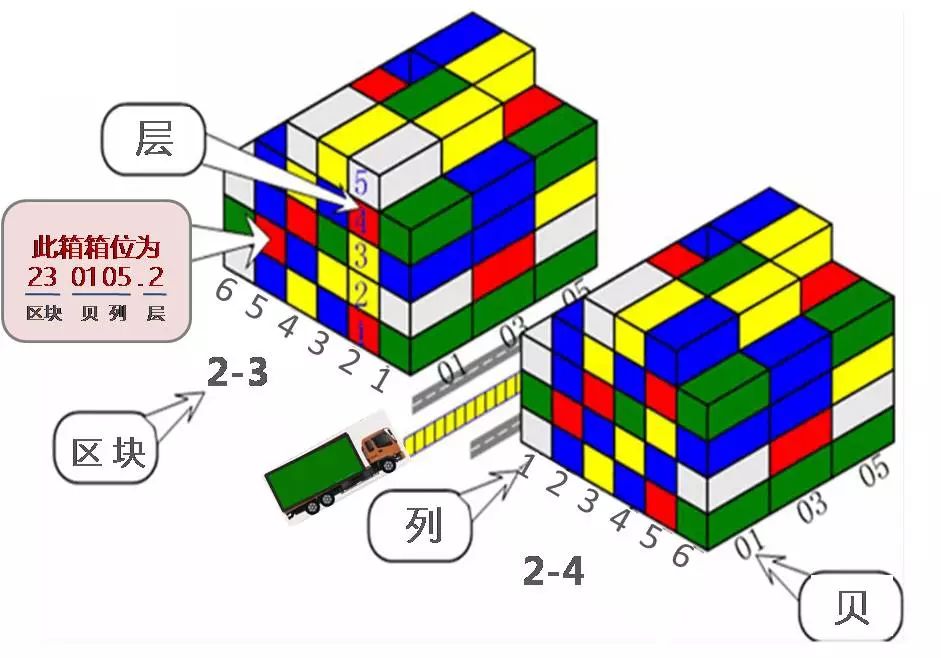
Alright, by combining these five steps, you can easily state a container's slot position. After sorting it out like this, doesn't it actually seem quite simple~
Do you know why some containers are stacked tightly together like this?
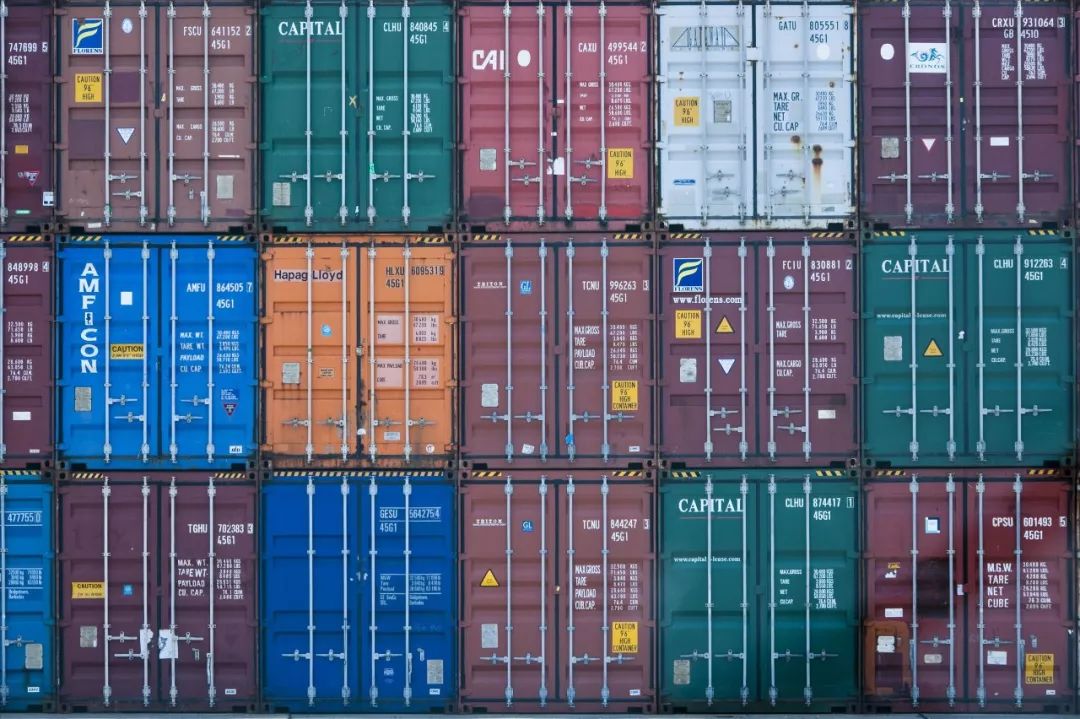
And why do some have a gap left like this?
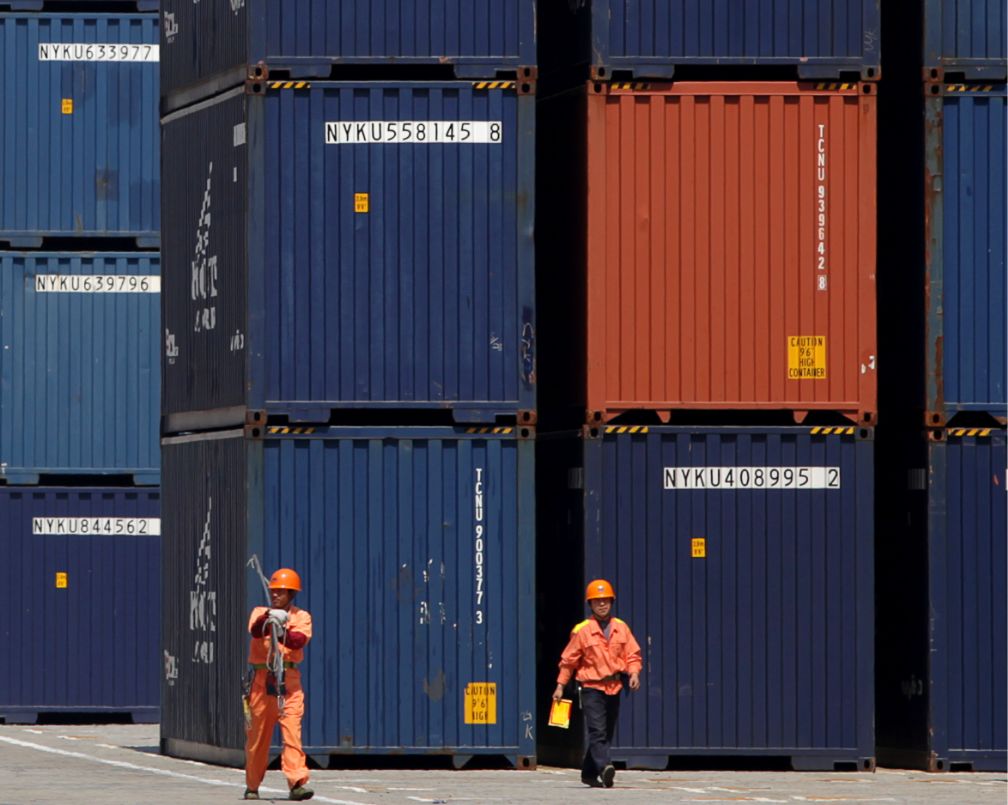
It's quite simple: generally, containers stacked tightly together are empty ones; those stacked with gaps between them are laden containers.
Let's reinforce this!!!!
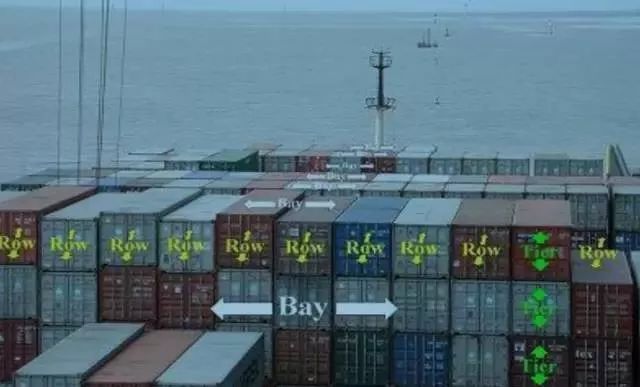
There are two ways to express this:
(1) Numbered sequentially from bow to stern using natural numbers: 01, 02, 03...
(2) Numbered from bow to stern using odd or even natural numbers.
When loading 20ft containers, use odd-numbered sequence: 01, 03, 05, 07...
When loading 40ft containers, use even-numbered sequence: 02, 06, 10, 14...
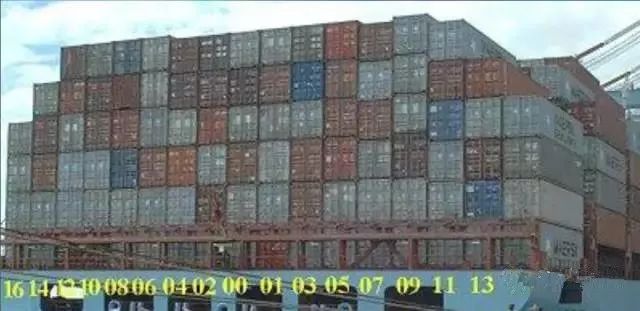
There are two numbering methods:
(1) Numbered sequentially from starboard to port using natural numbers: 01, 02, 03...
(2) Based on the centerline, odd numbers are assigned to starboard and even numbers to port in sequential order.
When the total number of rows is odd, the cell on the centerline is assigned row number 00, starboard-side cells are numbered 01, 03, 05, 07..., and port-side cells are numbered 02, 04, 06, 08...
When the total number of rows is even, there is no cell on the centerline. Starboard or port cells follow the same numbering pattern, using 01, 03, 05, 07... or 02, 04, 06, 08 respectively.
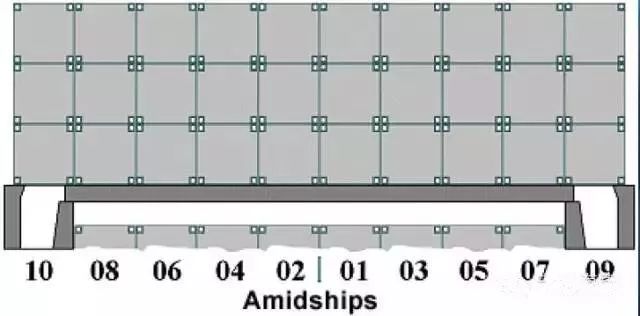
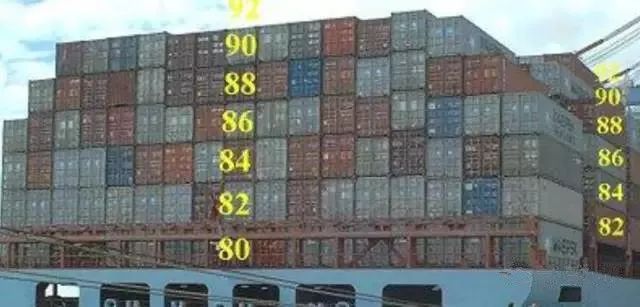
There are two representation methods:
Divided into hold tier number and deck tier number
(1) Method 1:
Hold tier numbers are based on the lowest tier in the hold, and are indicated from bottom to top using sequential numbers H1, H2, H3, etc.
Deck tier numbers are based on the deck, and are indicated from bottom to top using sequential numbers D1, D2, D3, etc.
(2) Method 2:
Hold tier numbers are based on the lowest tier in the hold, and are indicated from bottom to top using sequential numbers 02, 04, 06, etc.
Deck tier numbers are based on the deck, and are conventionally indicated from bottom to top using sequential numbers 80, 82, 84, etc.
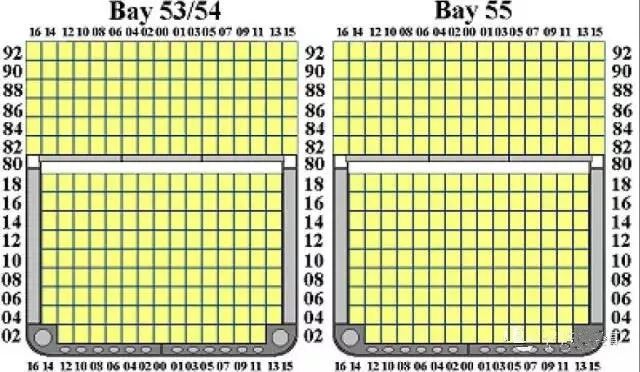
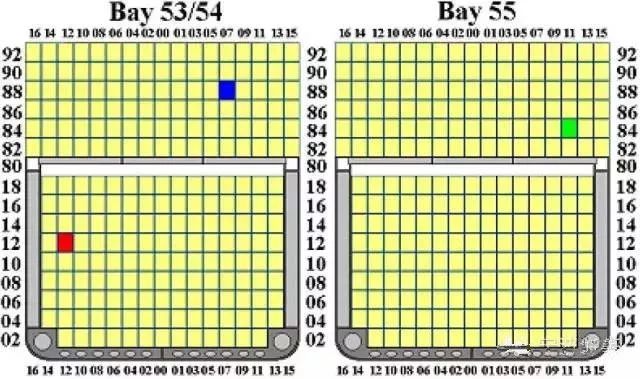
Source: Cang哪儿云
Please contact us for removal if any infringement occurs