






























Frequently Asked Questions about Wood Packaging for Export Goods

Foreword
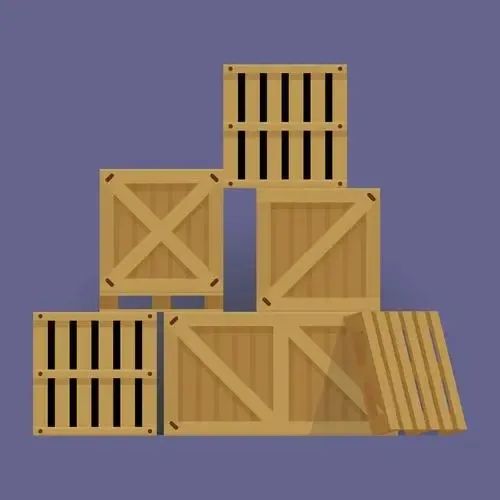
Customs conducts export inspections in accordance with laws, regulations, and international standards for wood packaging quarantine. Based on post-declaration control instructions, port customs quarantine the wood packaging used for outbound goods. Shipments with compliant packaging are released; those failing quarantine must be replaced with qualified packaging or undergo effective quarantine treatment and be marked accordingly before release. Export enterprises are free to choose qualified wood packaging or select accredited marking service providers.
Beyond this, no other entity or individual may, under any pretext or reason, compel export enterprises to replace or purchase wood packaging, or to subject wood packaging to quarantine treatment and marking.
Frequently Asked Questions

01
Why Did IPPC Develop International Standards for Wood Packaging Material?

First, to reduce the risk of forest pests spreading globally through wood packaging in international trade. Second, to coordinate the development of unified phytosanitary measures for wood packaging among WTO members, preventing unreasonable technical measures from affecting international trade.
02
What are the main contents of the international standard for wood packaging phytosanitary measures?
International standards for wood packaging quarantine require that wood packaging used in international trade must undergo effective fumigation or heat treatment before export. Treated wood packaging that meets the requirements must be marked with a standardized IPPC stamp, and no phytosanitary certificate or fumigation/disinfection certificate is required for the wood packaging used.
03
Why does China adopt international standards for wood packaging quarantine measures?
Implementing international standards for wood packaging quarantine measures can effectively control the risk of pests spreading internationally through wood packaging, facilitate on-site inspections, and reduce the workload of certification. Currently, many countries have adopted this international standard. As a WTO member, China is obligated to adopt international standards.
04
What does wood packaging include under the international standards for wood packaging quarantine measures?
Refers to wooden materials used for carrying, packaging, cushioning, supporting, and securing cargo, such as wooden crates, wooden cases, wooden pallets, wooden frames, wooden barrels, wooden drums, wooden wedges, dunnage, sleepers, and lining wood.
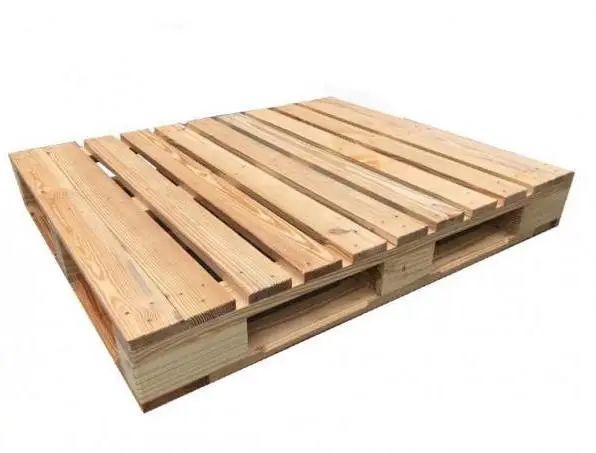
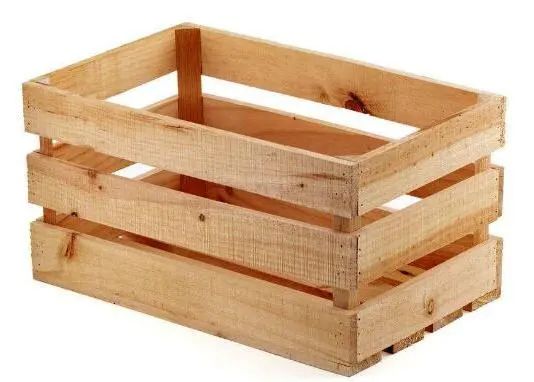
The following six types of wood packaging are excluded:
1
Wood packaging made entirely of thin wood (6 mm or less in thickness);
2
Wooden packaging made entirely of plywood, particleboard, fiberboard, etc., produced through gluing, heating, pressing, and other methods;
3
Wooden barrels that have been heat-treated during production for storing bulk wine or spirits;
4
Gift boxes used for packaging wine, cigars, or other commodities, which have undergone processing or other pest-eliminating treatments during production;
5
Sawdust, wood shavings, and wood wool;
6
Wooden components permanently fixed to transport vehicles and containers.
05
Must all export wood packaging bear the IPPC mark?
Effective January 1, 2009, all wood packaging for export goods must undergo quarantine treatment and bear the IPPC mark as required.
06
Who is authorized to apply the IPPC mark on wood packaging?
Only entities that have passed customs inspection and meet the requirements of the Administrative Measures for Quarantine Treatment of Wood Packaging Materials for Export Goods are qualified to apply the IPPC mark.
07
How can wood packaging manufacturers or fumigation treatment providers obtain the qualification to apply the IPPC mark?
Enterprises intending to engage in the fumigation treatment and marking of export wooden packaging shall submit an application to the local customs office in accordance with management regulations. The customs office will assess the enterprise's treatment capabilities and facility conditions. Those that pass the assessment will be granted the qualification to apply the IPPC-specific mark.
08
Can an enterprise qualified to apply the mark affix the IPPC-specific mark at will?
Not Allowed:
The enterprise applying the mark must declare to the local customs authority before conducting phytosanitary treatment on each batch of wood packaging. Customs shall supervise the entire treatment process. If the treatment meets the requirements, customs will oversee the application of the IPPC mark.
09
Where can exporters purchase wooden packaging already bearing the IPPC mark?
Exporters should purchase wooden packaging from enterprises qualified to apply the mark and require them to provide a certificate of compliance for the phytosanitary treatment of the wooden packaging. If an exporter has already purchased wooden packaging without the IPPC mark, they may entrust an enterprise qualified to apply the IPPC mark to carry out the treatment and apply the mark, and provide the corresponding certificate of compliance for the treatment.
The General Administration of Customs of China regularly updates the national list of enterprises qualified to apply marks to wooden packaging for export and publishes it on its website. The list of qualified enterprises in the Tianjin area is shown in the table below.
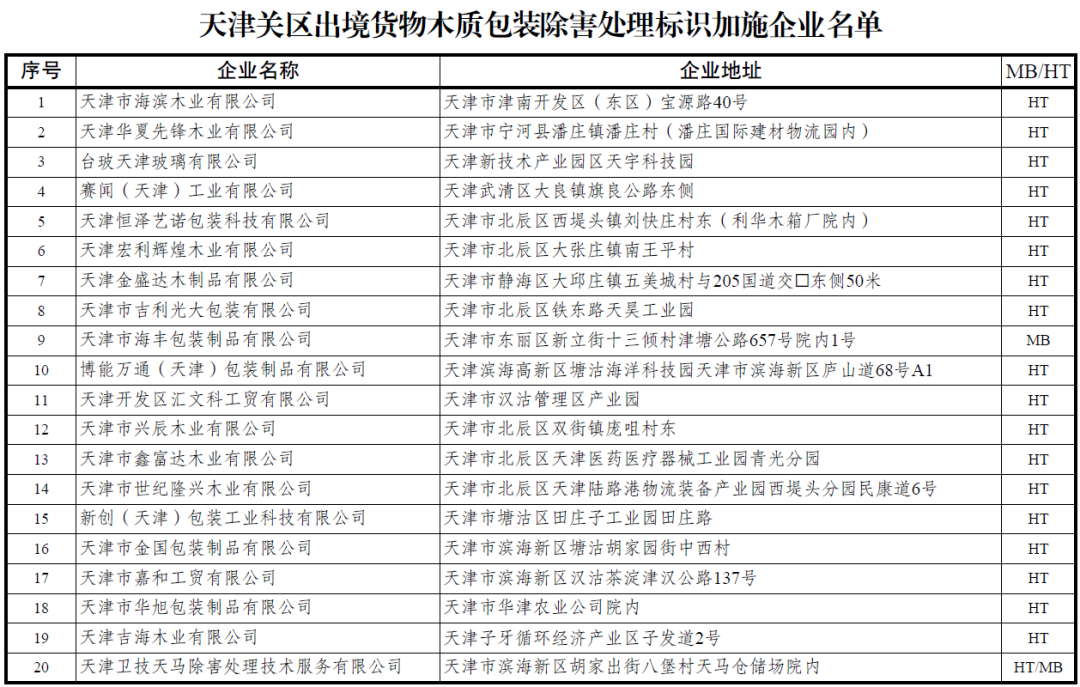
(Click to enlarge)
10
Can wooden packaging undergo phytosanitary treatment (fumigation) at the port of departure and then have the IPPC mark applied afterwards?
Given that fumigation of wooden packaging at the port of departure is constrained by time, space, and environmental conditions, and that marking application is operationally difficult and increases export costs, it is recommended to carry out quarantine treatment on wooden packaging before packing and loading goods, or to replace it with compliant wooden packaging.
11
How should enterprises using wooden packaging address the impact of wooden packaging quarantine risks on trade?
Enterprises using wooden packaging must pay close attention to wood packaging quarantine requirements and enhance their awareness of prevention. They should purchase from suppliers published by Customs that are qualified to apply IPPC marks, or commission qualified marking enterprises to carry out pest treatment and apply the marks, so as to avoid trade losses caused by non-compliant wooden packaging.
12
What Are the Consequences of Non-Compliant Wooden Packaging?
Upon Arrival at the Port of Departure
In accordance with China's quarantine requirements for export wood packaging, if non-compliant wood packaging is used and discovered during pre-export inspection, it may lead to export delays due to repackaging or treatment, and could even affect vessel loading and shipment.
Upon Arrival at the Port of Destination
In accordance with the import quarantine requirements established by relevant countries based on international standards, wood packaging that lacks an IPPC mark, has an incorrectly applied IPPC mark, or is found to contain pests will be subject to measures such as treatment, destruction, or denial of entry at the port of arrival.
13
What are the penalties for forging, altering, misusing, or improperly using IPPC marks?
The IPPC mark is a legally binding inspection and quarantine identifier. Any forgery, alteration, fraudulent use, or improper use of the mark shall result in administrative penalties against the relevant enterprise in accordance with the Law of the People's Republic of China on the Entry and Exit Animal and Plant Quarantine and its implementing regulations.
Source: Tianjin Customs 12360 Hotline