





























NEWS

HOME ꄲ NEWS ꄲ Officially Implemented on June 1! Interpretation of the New Standard for the Inspection of Packaging for Export Dangerous Goods

Officially Implemented on June 1! Interpretation of the New Standard for the Inspection of Packaging for Export Dangerous Goods

Published:2026-10-21 02:35
넶Views:5
 

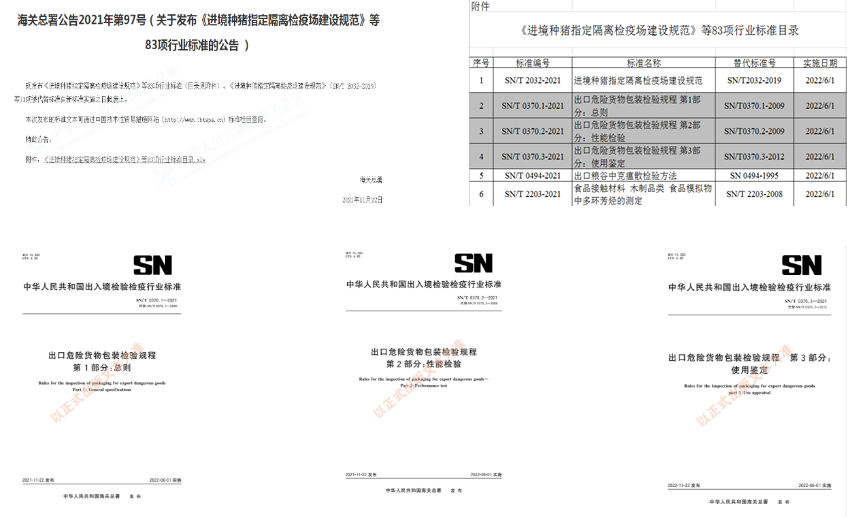
On November 22, 2021, the General Administration of Customs officially released the SN/T 0370-2021 series of standards, "Rules for the Inspection of Packaging for Export Dangerous Goods," in Announcement No. 97 of 2021.This series of standards consists of three parts: General Provisions, Performance Inspection, and Use Appraisal, and will officially take effect on June 1, 2022.
 

Background


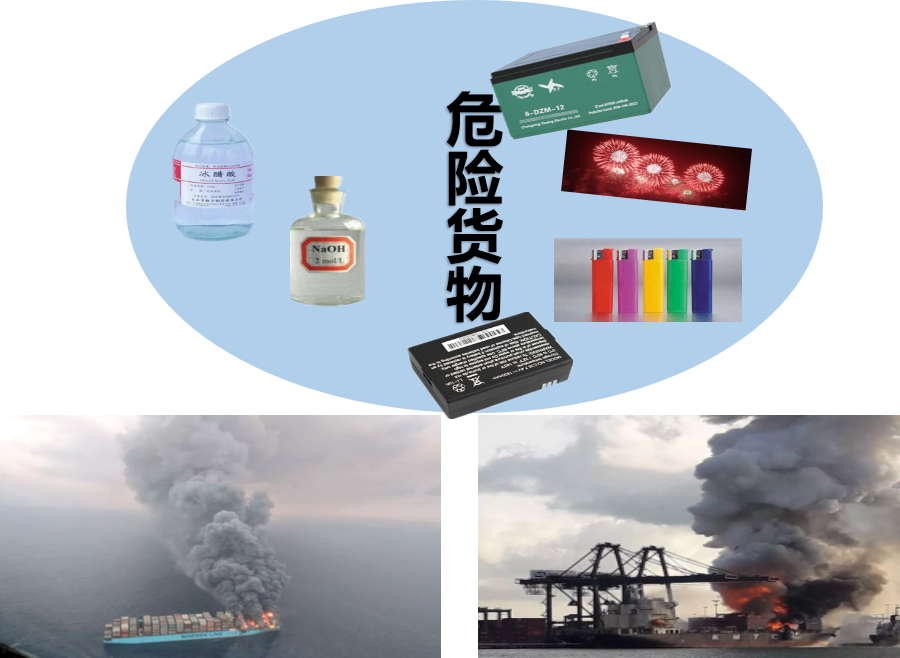
Dangerous goods are important commodities in international trade, widely used across industries such as chemicals, consumer products, pharmaceuticals, and food additives. However, due to their inherent hazardous properties, any slight negligence during production, storage, transportation, or use can easily lead to serious accidents, causing severe damage to property, human health, and the environment.
The performance safety and correct use of dangerous goods packaging play a vital role in the safe transport of dangerous goods. The SN/T 0370 series of standards, "Rules for the Inspection of Packaging for Export Dangerous Goods," published in 2009, consists of three parts: General Provisions, Performance Inspection, and Use Appraisal. It provides clear provisions on technical content and inspection procedures such as coding, marking, performance testing, and use appraisal for export dangerous goods packaging. Currently, it is the most frequently used and clearly defined inspection standard applied by customs when inspecting and appraising export dangerous goods packaging. It holds significant guiding importance for the inspection and supervision of such packaging, playing a key role in ensuring the safety of China's export dangerous goods and promoting foreign trade.
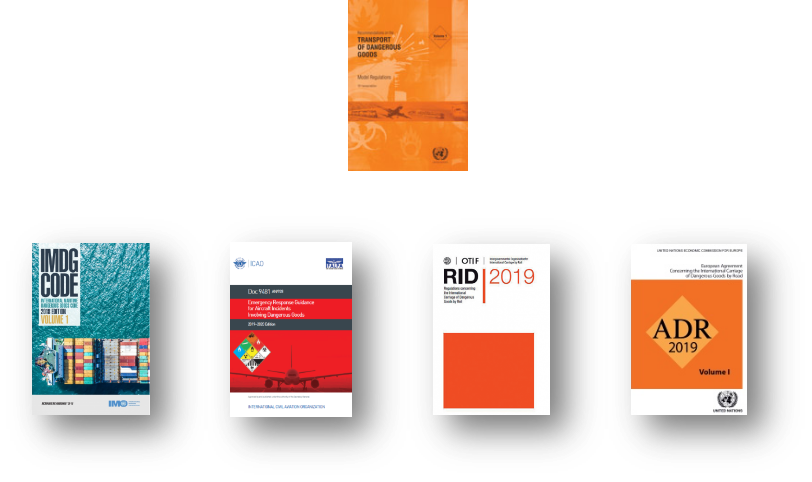
To maintain the standard's advanced nature and alignment with international dangerous goods transport regulations, in 2019, the Professional Committee for Dangerous Goods Packaging under Customs Technical Specifications undertook a revision of this series of standards. Centered on the technical requirements of the UN TDG, the revision integrated relevant requirements from air transport — ICAO "Technical Instructions for the Safe Transport of Dangerous Goods by Air," sea transport — IMO "International Maritime Dangerous Goods Code," rail transport — OTIF "Regulations concerning the International Carriage of Dangerous Goods by Rail," and road transport — "European Agreement concerning the International Carriage of Dangerous Goods by Road."


In this issue, we first introduce Part 1: General Provisions


1. Scope of Application
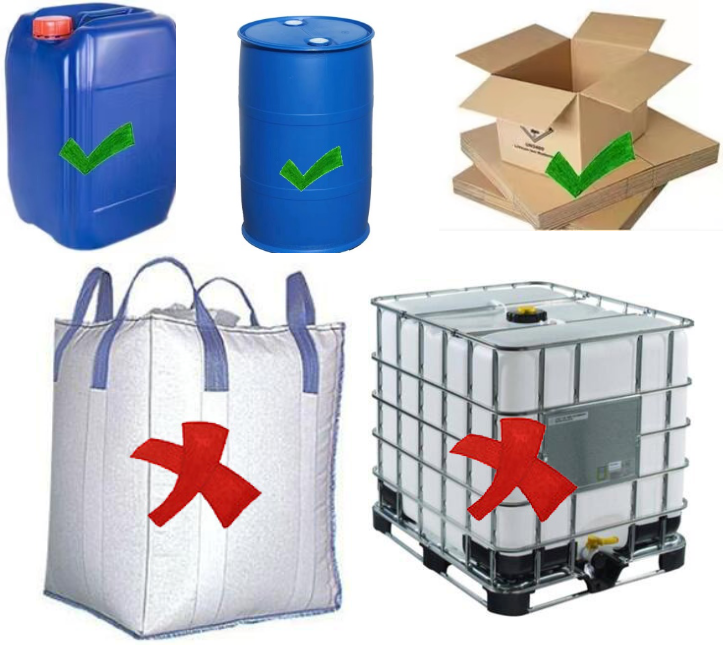


This standard applies to the packaging of export dangerous goods with a capacity not exceeding 450L (for liquids) and a net weight not exceeding 400Kg (excluding pressure receptacles, and packaging for radioactive substances and infectious substances). It specifies requirements for the classification, coding, marking, and labeling of packaging. Performance testing and use appraisal of intermediate bulk containers and large packaging shall be conducted in accordance with other corresponding standards.


II. Revisions


Compared with SN/T 0370.1-2009, this part has undergone not only editorial modifications but also corresponding revisions to the technical content, totaling 30 changes. The revisions are mainly concentrated in the sections on packaging marks and labels. The key technical content changes are as follows:


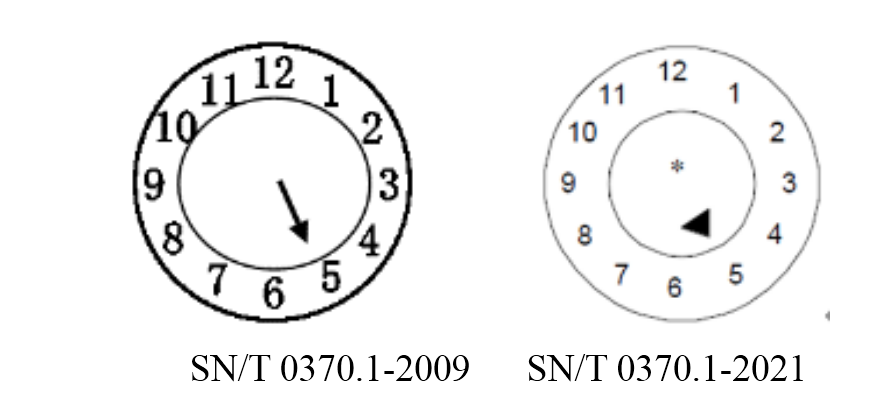
Revised the marking method for the manufacturing month of plastic containers
 

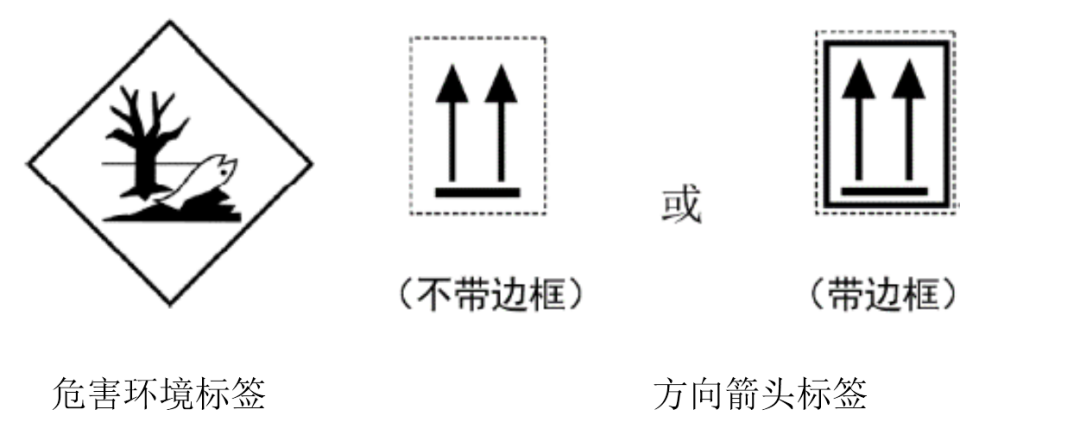
Added requirements for labels on the outer surface of packaging


III. Key Highlights


This standard specifies the requirements for coding, marking, and labeling of export dangerous goods packaging. This content constitutes the fundamental knowledge for the inspection of export dangerous goods packaging. Only by fully understanding and mastering this standard can one correctly interpret and apply the standards in Parts 2 and 3.


Packaging Coding

To clearly indicate the type/material and form of dangerous goods packaging containers (outer packaging), a coding system is used where each packaging container is represented by a specific code. The packaging code generally consists of three parts arranged in parallel:
Part 1: An Arabic numeral — indicating the type of packaging container, e.g., the number "1" denotes a "drum";
It should be noted that this standard introduces the number "0" to represent light-gauge metal containers for road or rail transport.
Part 2: Uppercase English letter — indicates the material of the packaging container. For example, the letter "A" stands for "steel".
Part 3: Arabic numeral — indicates the category within its packaging type. For example, for drums, the number "1" indicates a closed head, and the number "2" indicates an open head.
Examples:     
 1A2 — Open-head steel drum
 1H1 — Closed-head plastic drum
 1G — Fibre drum
 6HA1 — Steel-plastic composite drum (for composite packaging, the inner container material is listed first, followed by the outer container material)


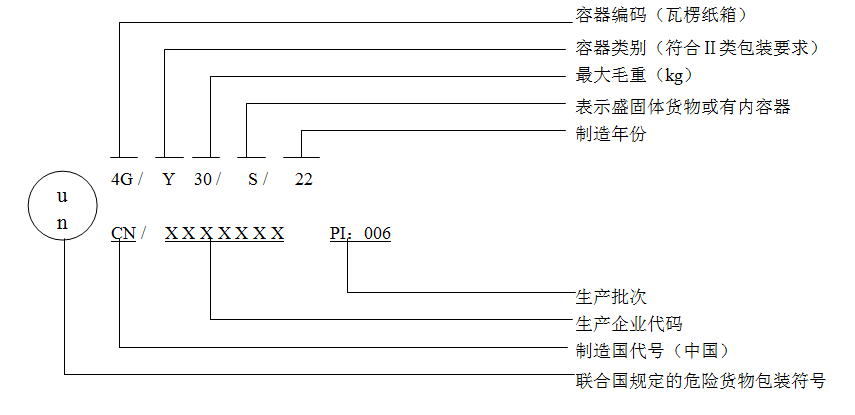
Packaging Markings

The marking indicates that the packaging bearing it has successfully passed the tests specified in the standard, but it does not necessarily certify that the packaging is suitable for containing any substance.

Example: Containing liquid substances
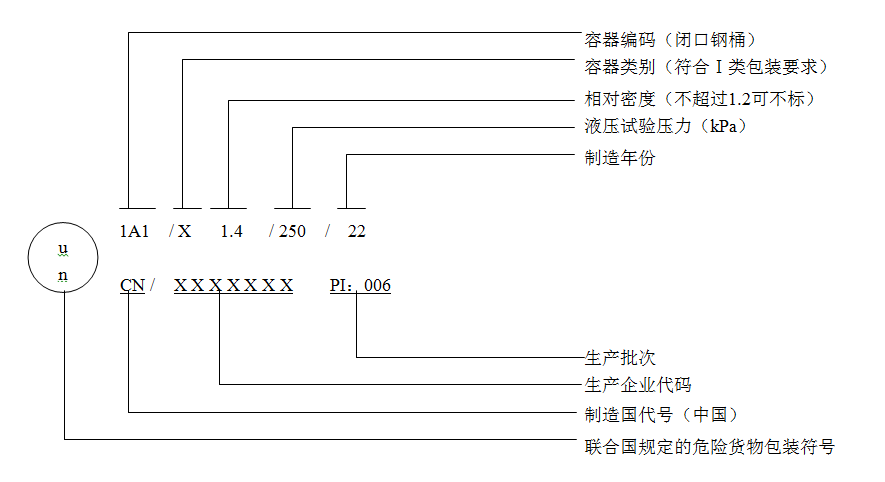
Example: Containing solid substances


IV. Key Challenges and Solutions


The following key points should be noted when implementing this section of the standard:


Scope of the Standard
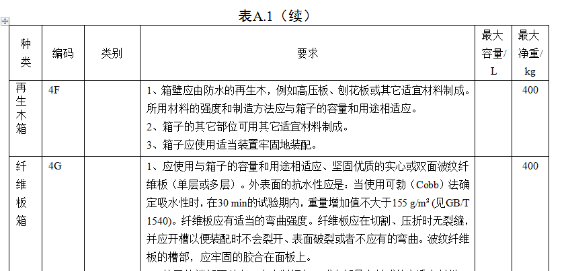
In Chapter 1, "Scope of the Standard," the phrase "containment capacity not exceeding 450 liters" specifically refers to containers used for "holding liquids." The net weight and volume limits for each packaging type must be determined according to Appendix A. For example, corrugated fiberboard boxes only have a net weight limit, with no volume restriction. This means that if a box has a volume of 500L and a net weight of 300Kg, it still falls under this standard, and its code should be 4G, not marked as 11G or 50G.


Marking of Plastic Containers

Section 5.2 of the standard specifies the method for marking the month and year of manufacture on plastic containers. The production month symbol replaces the "production batch" in the packaging mark under 5.2.2. This means that for plastic containers, the production batch is represented by a month graphic and must not be indicated as "PI:XXX".


The following points should be noted regarding the month graphic:
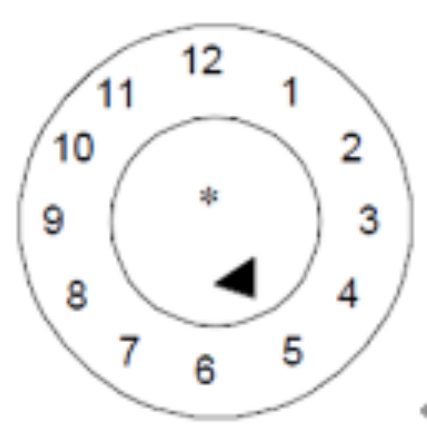
The last two digits of the year of manufacture may be displayed at the * position. Note that “may” here means it is optional, not mandatory.

This graphic may be placed separately from the rest of the marking, in a blank area of the container.


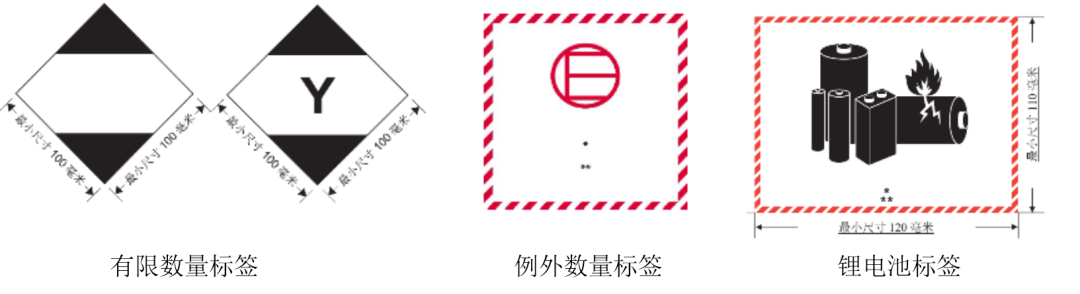
Limited Quantity Label

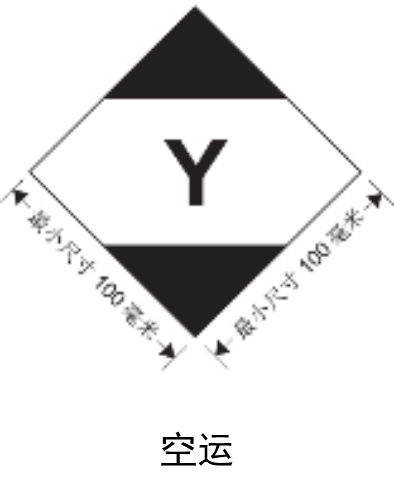
Packages containing dangerous goods in limited quantities must display the label shown below. The label must be clearly visible, legible, and not significantly degraded by prolonged outdoor exposure.


Key Points for Using the Limited Quantity Label:
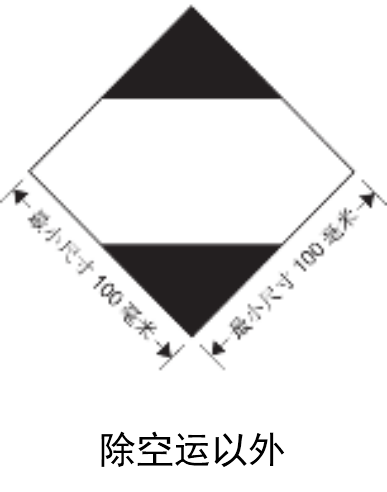
Air transport labels differ from other transport labels, featuring a "Y" in the center;

Packaging for dangerous goods in limited quantities by sea does not require a hazard label indicating the dangerous characteristics of the contents, whereas packaging for dangerous goods in limited quantities by air must display the hazard label indicating the dangerous characteristics of the contents.


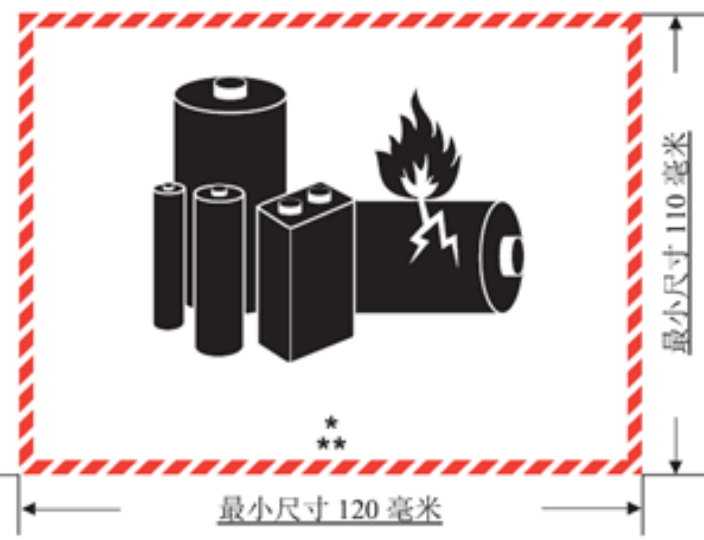
Lithium Battery Label

For packages containing lithium cells or batteries, the label shown below must be displayed in accordance with Special Provision 188 of the TDG Model Regulations.


Important note:

Not all packages containing built-in lithium battery packs are required to bear this label. It is only mandatory when the provisions of Section 188 are met. Section 188 is an exemption clause for lithium batteries; compliance with Section 188 allows exemption from packaging performance tests.   **Understanding Packaging Closure Types** Section 6.3.2 of the standard specifies the packaging closure requirements for organic peroxides: For organic peroxides, all receptacles shall be "effectively closed." **Please note the following points regarding packaging closure types:**
An effective seal is also known as a liquid-tight seal. The organic peroxides referred to here are not limited to those in liquid form.

After filling dangerous goods, the required effective seal (liquid-tight seal), gas-tight seal, or secure closure must be applied through appropriate closure devices, tying, bonding, or other methods in accordance with the packing instructions and special provisions.

Liquid-tight seal ≠ Hydraulic pressure test 

Gas-tight seal ≠ Air-tightness test
The effectiveness of the closure type should be verified during the inspection for use after the dangerous goods have been filled. If the dangerous goods require a liquid-tight or gas-tight seal, this should not be interpreted as requiring a hydraulic pressure test or an air-tightness test. Only for those dangerous goods with special requirements (e.g., calcium carbide, sodium hydrosulfite), where the corresponding packing instructions or special provisions explicitly state that the packaging for such substances must pass an air-tightness test, should an air-tightness (leakproofness) test be added during the packaging performance inspection.
▼ Interpretation of UN Markings for Dangerous Goods Packaging


Source: China Customs Release