





























Port congestion spreads globally again! Shipping lines aggressively blank sailings! Three major alliances cancel 61 voyages!
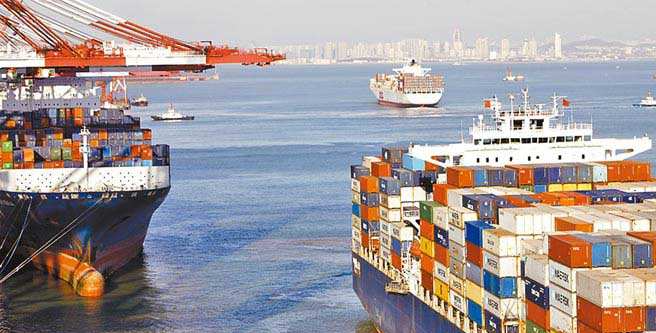
Currently, container port congestion is intensifying across all continents.
Clarksons' Container Port Congestion Index shows that as of last Thursday, 36.2% of the global fleet was stuck in ports, up from the pre-pandemic average of 31.5% between 2016 and 2019. Clarksons noted in its latest weekly report that congestion on the U.S. East Coast has recently surged to near-record levels.
German carrier Hapag-Lloyd released an updated operational report last Friday, highlighting the numerous congestion challenges facing global carriers and shippers.
Asia: Due to the ongoing pandemic and seasonal typhoons, major Chinese port terminals such as Ningbo, Shenzhen, and Hong Kong will face pressure from yard and berth congestion.
Reports indicate that at other major Asian ports, Singapore's yard density has reached 80%, while South Korea's largest port, Busan, has an even higher yard density of 85%.
Europe: The start of summer holidays, waves of strikes, rising COVID-19 cases, and the influx of vessels from Asia have caused congestion at many ports, including Antwerp, Hamburg, Le Havre, and Rotterdam.
Latin America: Ongoing nationwide protests have disrupted port operations in Ecuador, while further north, a cyberattack on Costa Rica's customs system two months ago continues to cause trouble. Mexico is one of the countries most severely affected by spreading port congestion, with yard density reportedly reaching as high as 90% at many ports, leading to severe delays.
North America: Reports of terminal delays have dominated shipping news headlines throughout the pandemic and remain a concern entering July.
US East Coast: Berth waiting times in New York/New Jersey exceed 19 days, while Savannah's berth waiting time is 7 to 10 days, approaching record levels.
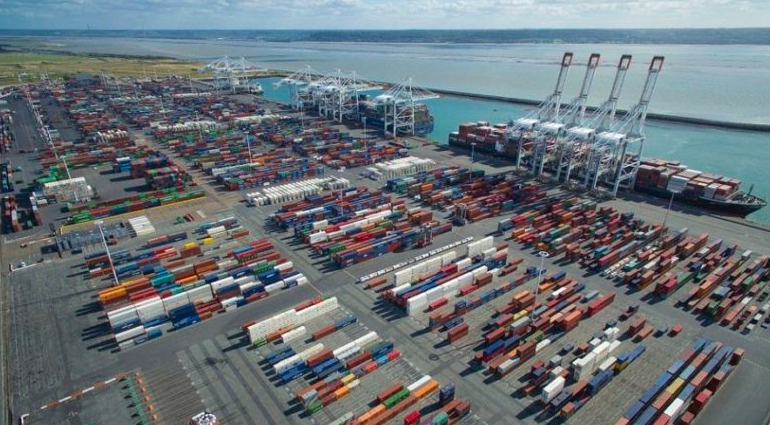
US West Coast: On July 1, negotiations between US West Coast dockworkers and employers failed to reach an agreement, casting a shadow over potential slowdowns and strikes at West Coast ports. From January to June this year, US imports from Asia grew by 4%, while import volumes via the West Coast fell by 3%, with the West Coast's share of total US imports dropping from 58% last year to 54%.
Canada: Due to limited rail availability, according to Hapag-Lloyd, Vancouver is facing "severe delays," with yard density reaching 90%. Meanwhile, at the Port of Prince Rupert, terminal utilization is as high as 113%, and the current average rail dwell time is 17 days. The backlog is primarily due to a lack of available rail cars.
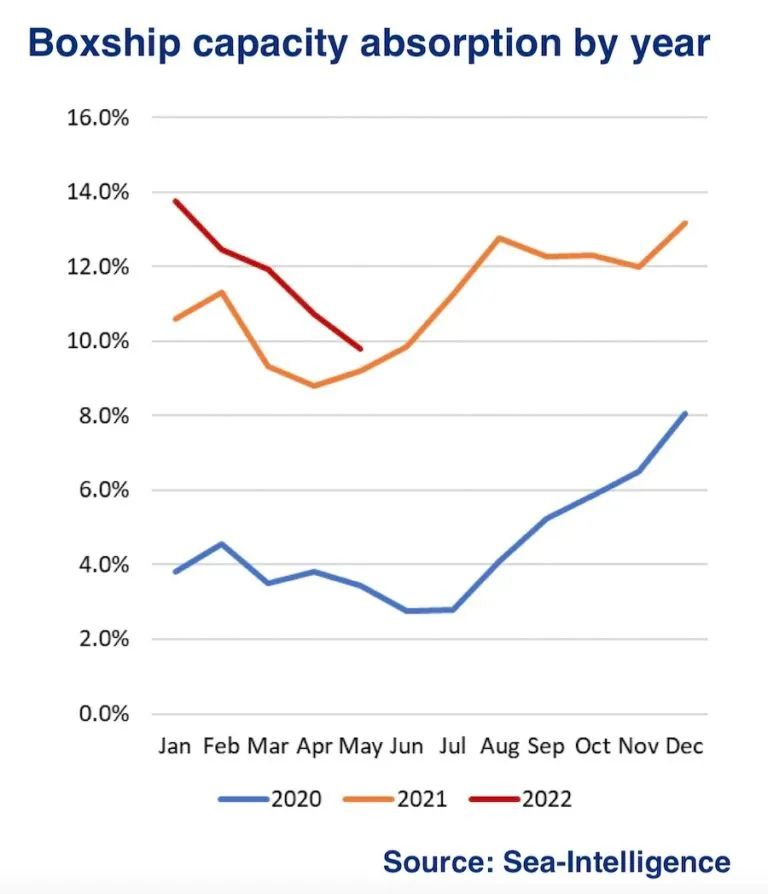
Statistics analyzed by Copenhagen-based Sea-Intelligence show that as of the end of May, due to supply chain delays, 9.8% of the global fleet was unavailable, down from the peak of 13.8% in January and also lower than the 10.7% recorded in April.
Although ocean freight rates remain at incredibly high levels, spot rates have been on a downward trend for most of 2022.
According to the latest report from a well-known international supply chain logistics and technology platform, as ocean freight spot rates have plummeted and container demand has dropped year-on-year, carriers have taken steps to protect profitability.
Furthermore, the platform's report noted that an increasing number of shipping lines are redirecting vessels to "more profitable" routes, turning some service loops into "ghost" services without designated ships.
According to the latest data released by Drewry on Friday, over the next five weeks (Weeks 27–31), the three major global shipping alliances have collectively cancelled a total of 61 sailings. Among them, the 2M Alliance and THE Alliance each cancelled the most at 23 sailings, while the Ocean Alliance cancelled the fewest at 15 sailings.
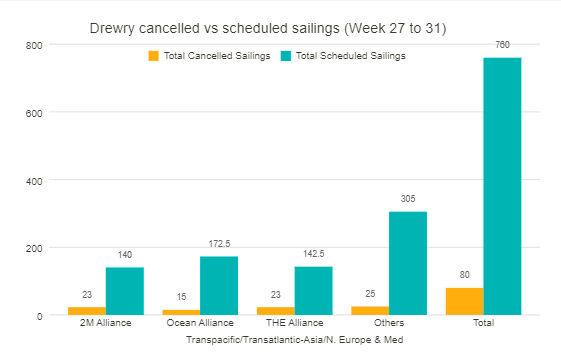
Out of a total of 760 scheduled sailings on major routes such as Transpacific, Transatlantic, Asia-North Europe, and Asia-Mediterranean, 86 sailings were cancelled between Weeks 27 and 31, representing a cancellation rate of 11%.
According to Drewry's data for this period, 66% of the blank sailings will occur on the Transpacific eastbound trade lane, primarily to the U.S. West Coast.
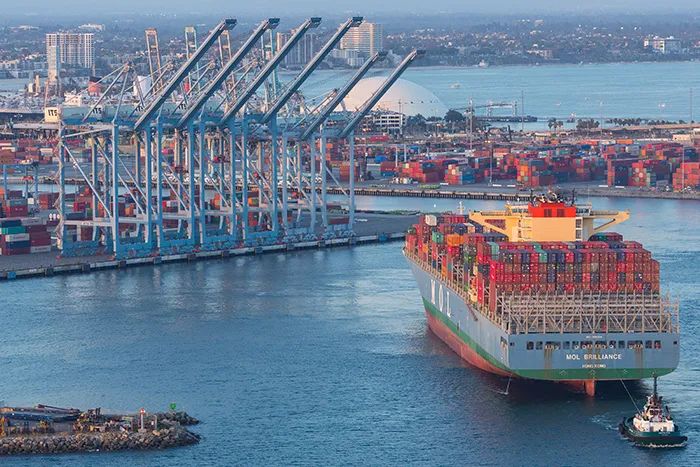
According to statistics compiled by E-sshipping, compared with data from June–July 2021, the total number of blank sailings in June–July 2022 is approximately three times that of last year. Looking at the proportion of cancelled sailings relative to planned sailings, it is clear that compared to last year, both the number of planned sailings and the cancellation rate have increased.
Regionally, the proportion of blank sailings on the US West Coast has increased significantly.In terms of alliances, all except 2M have seen their blank sailing ratios rise by around 10%.
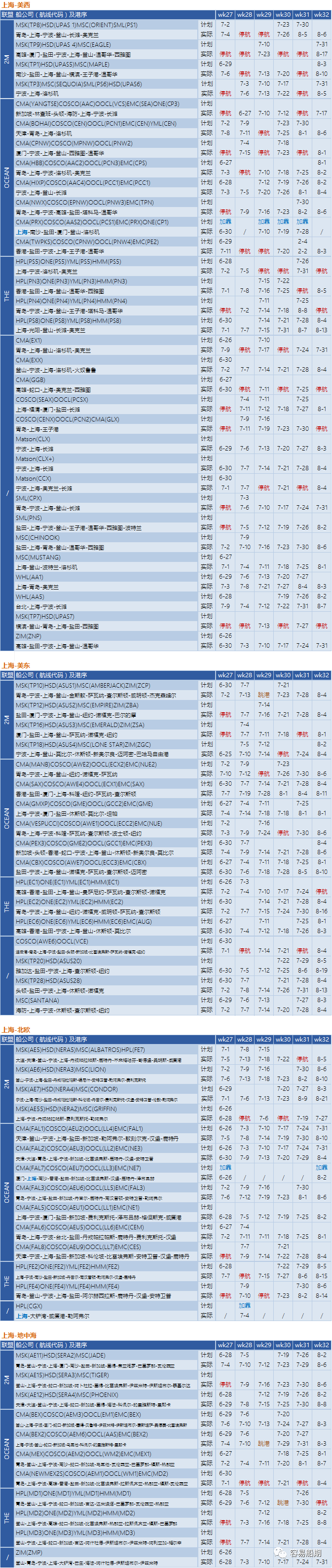
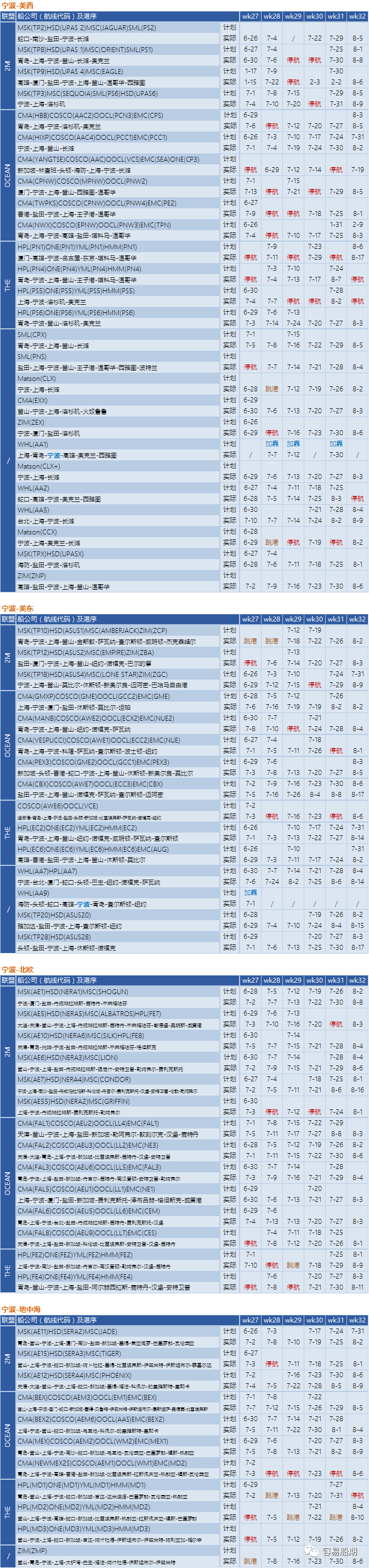
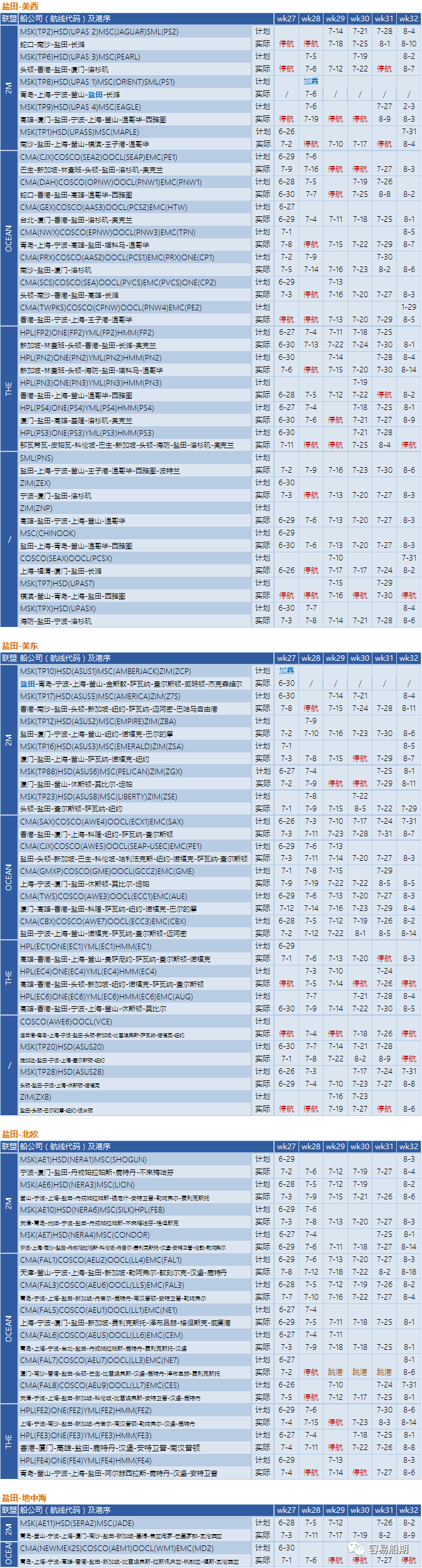
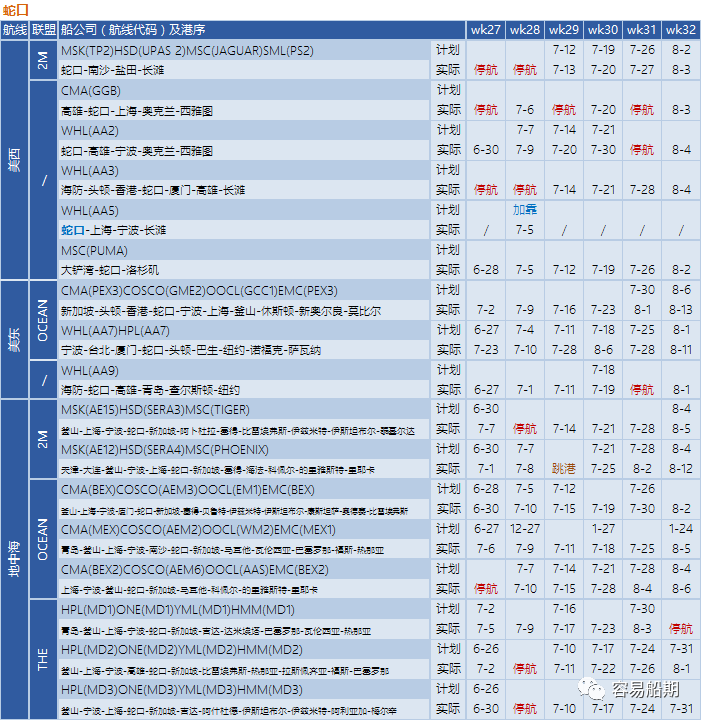
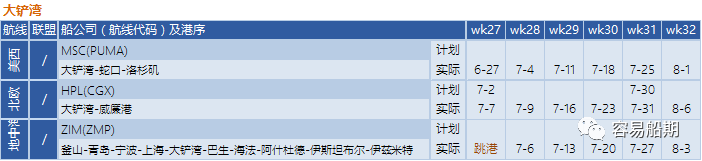
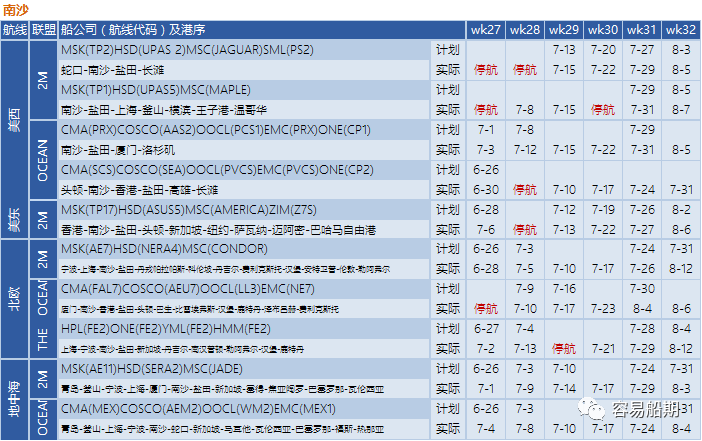
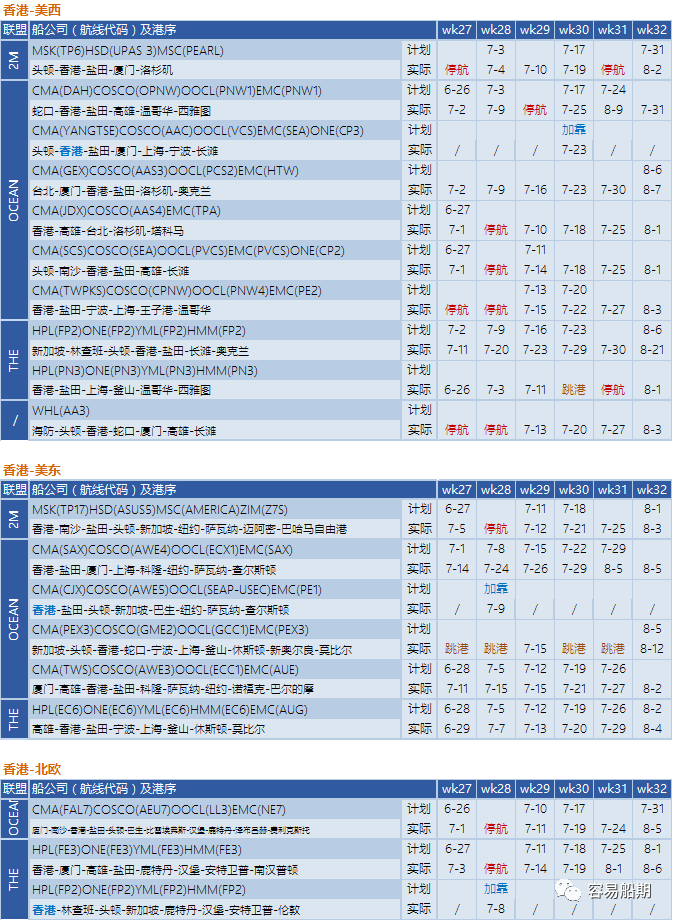
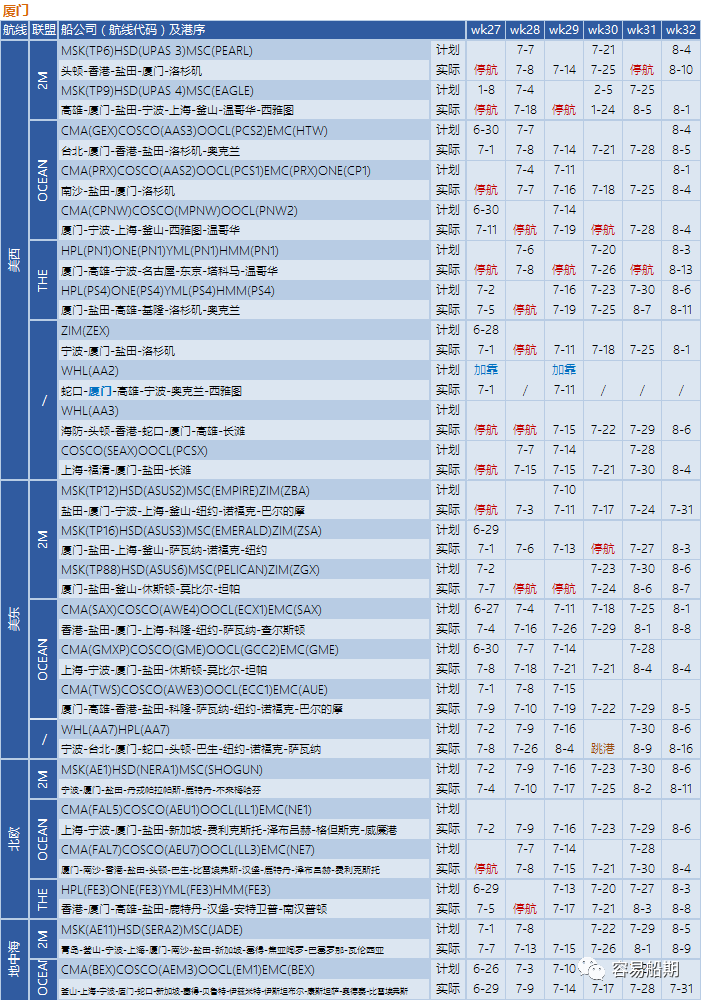
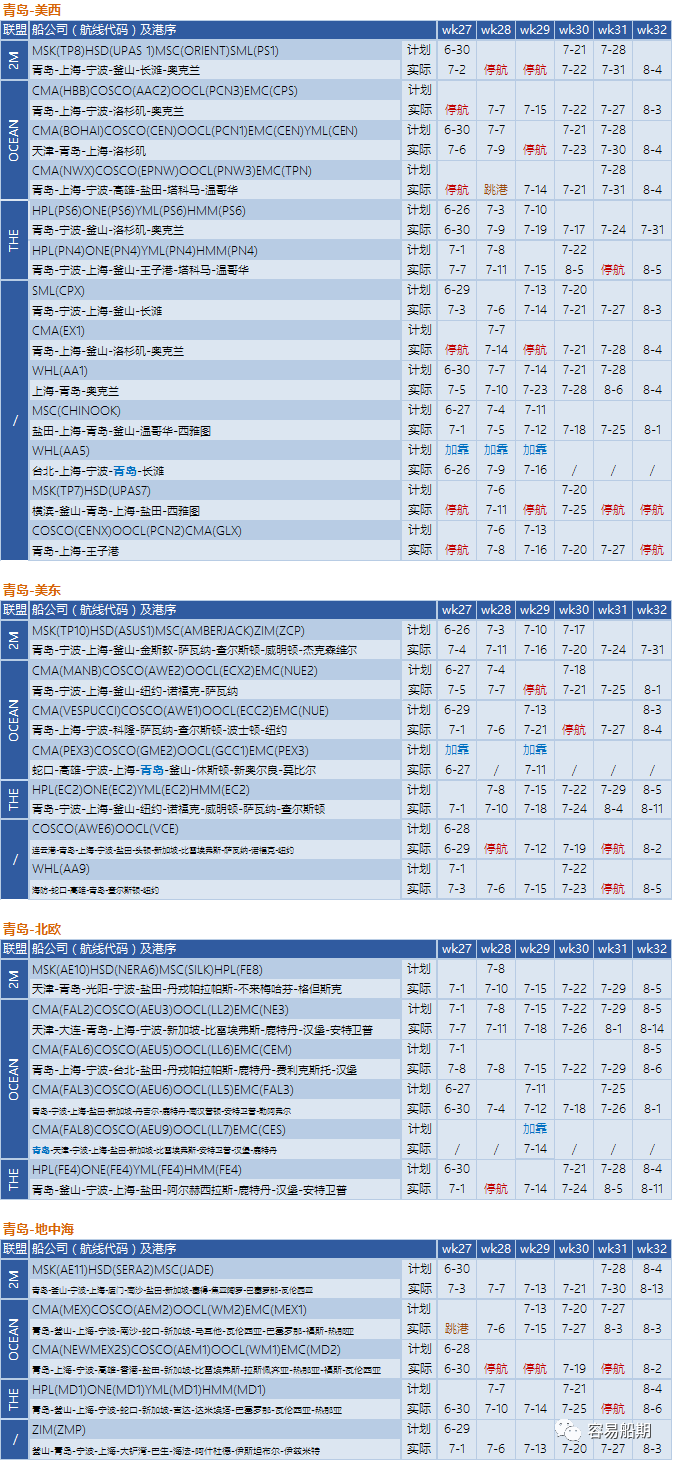
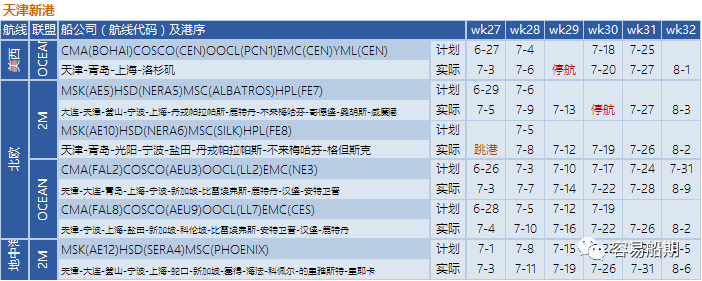
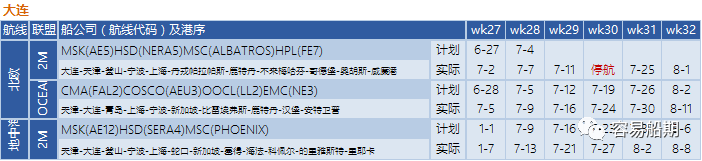
Below is a summary of blank sailings and port omissions from Mainland China to North America, Europe, and the Mediterranean for Weeks 27-32 (from June 26, 2022, to August 6, 2022), compiled by EZ Shipping Schedule:
Blank Sailing and Port Omission Summary (Swipe to View)


Ps: This article is compiled by the Foreign Cross-Border Research Center and Foreign Shipping from sources including Sea Shipping Network and others. Please be sure to credit the source when reposting.