



























Why can't the largest container ships exceed 400 meters in length?
The Suez Canal has explicit regulations regarding vessel length. Ships exceeding 400 meters must go through a series of approval procedures and can only transit after obtaining consent. However, the approval process is not only complex but also extremely time-consuming. That is why the world's largest container ships have never surpassed the 400-meter mark. It is not that exceeding 400 meters is impossible — it is simply unnecessary.
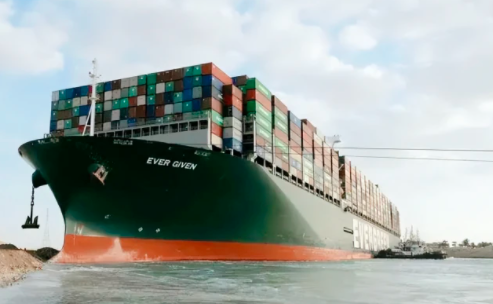
Moreover, determining a vessel's length is not as simple as one might imagine — it requires comprehensive consideration of multiple factors. When a ship sails at sea, it is subjected to wave action, and the additional bending moment and shear force induced by waves are directly proportional to the ship's length. This means the longitudinal bending strength must be enhanced. Consequently, the quantity of materials required for the deck, shell plating, bottom plating and other components increases. This increase leads to thicker plates and larger stiffeners.As a result, the total steel weight of the vessel rises sharply, which is highly unfavorable for construction costs.
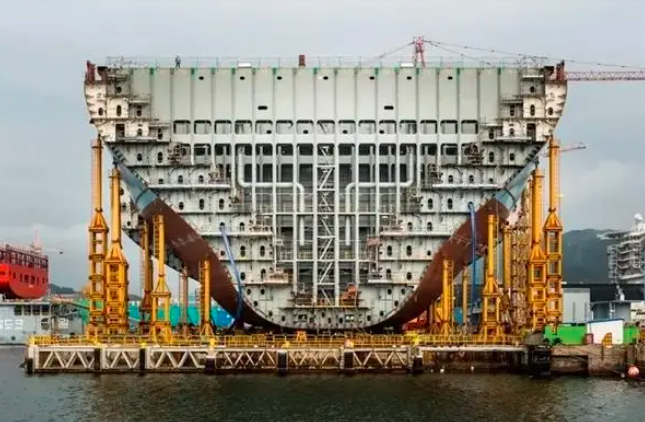
In addition, frictional resistance is generated as a ship moves through water. The larger the vessel, the greater the frictional resistance it encounters, which in turn requires significant increases in main engine horsepower, auxiliary machinery and boiler capacity.This drives up both fuel consumption and overall operating costs.Most importantly, very few ports around the world can accommodate such enormous vessels. Therefore, bigger is not always better when it comes to ships.