






























Did you know there are so many techniques for container loading?
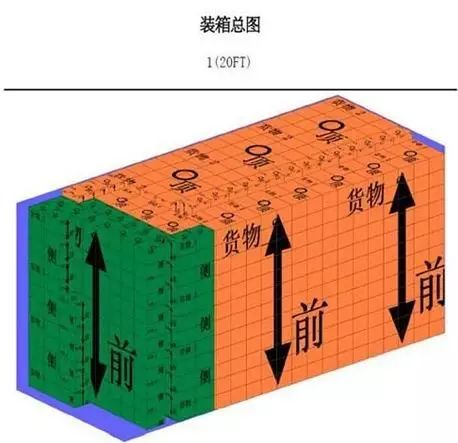
Mixed Loading Precautions
When exporting goods, companies are typically most concerned about cargo data errors, cargo damage, and discrepancies between the data and customs declaration, which may lead to customs not releasing the shipment. Therefore, before loading the container, the shipper, warehouse, and freight forwarder must coordinate thoroughly to avoid such issues.
1. Avoid loading goods of different shapes and packaging together whenever possible.
2. Goods that may leak dust, liquid, moisture, odor, etc., from their packaging should not be placed together with other goods whenever possible. "If unavoidable, use canvas, plastic film, or other materials to separate them," said Cheng Qiwei.
3. Place lighter goods on top of relatively heavier goods.
4. Place goods with weaker packaging strength on top of goods with stronger packaging strength.
5. Place liquid goods and cleaning goods underneath other goods as much as possible.
6. Cover goods with sharp corners or protruding parts to prevent damage to other goods.
Container Loading Tips
There are typically three methods for on-site container loading: fully manual loading; using a forklift to move goods into the container and then stacking them manually; and fully mechanized loading, such as using a forklift to stack palletized goods inside the container.
1. Under any circumstances, when loading cargo into a container, the weight of the goods inside must not exceed the container’s maximum payload, which is the container’s gross weight minus its tare weight. Generally, both the gross weight and tare weight are marked on the container door.
2. Each container has a fixed unit capacity by weight. Therefore, when loading the same type of cargo, knowing the cargo density allows you to determine whether it is heavy or light cargo. Cheng Qiwei notes that if the cargo density is greater than the container’s unit capacity, it is heavy cargo; otherwise, it is light cargo. Identifying and distinguishing between these two situations promptly and clearly is crucial for improving loading efficiency.
3. When loading, the weight on the container floor must be evenly balanced. It is strictly forbidden to have the load’s center of gravity concentrated at one end.
4. Avoid creating concentrated loads. For example, when loading heavy cargo such as machinery and equipment, lay wooden planks or other dunnage materials on the container floor to distribute the load as much as possible. The average safe load per unit area on a standard container floor is approximately: 1330×9.8 N/m² for a 20-foot container, and 980×9.8 N/m² for a 40-foot container.
5. When loading cargo manually, pay attention to handling instruction marks on the packaging such as “Do Not Turn Over,” “Lay Flat,” or “Stand Upright.” Be sure to use loading tools correctly, and the use of hand hooks is prohibited for bundled cargo. Goods inside the container must be loaded neatly and packed tightly. For cargo that is prone to bundle loosening or has fragile packaging, use dunnage or insert plywood between items to prevent movement inside the container.
6. When loading palletized cargo, accurately determine the container’s internal dimensions and the external dimensions of the cargo packaging to calculate the number of pieces that can be loaded, aiming to minimize wasted space and maximize cargo volume.
7. When loading with a forklift, operations are limited by the machine’s free lift height and mast height. Therefore, where conditions permit, a forklift can load two layers at once, but a certain gap must be left between the upper and lower layers. If conditions do not allow loading two layers at once, when loading the second layer, consider the forklift’s free lift height and the potential mast lift height. The mast lift height should then be the height of the first layer minus the free lift height, so that the second layer of goods can be placed on top of the first layer.
Additionally, a standard forklift with a 2-ton lifting capacity typically has a free lift height of around 1250px. However, there is also a type of forklift with full free lift height; as long as the container’s internal height allows, this machine is not affected by mast lift height limitations and can easily stack two layers of cargo. Furthermore, it is important to place dunnage wood under the cargo so that the forks can be withdrawn smoothly.
Finally, it is best not to ship cargo unpacked; at the very least, it should have packaging. Do not risk damaging goods solely to save space. Most general cargo comes with packaging. Only large items like boilers or building materials can be more challenging and must be strapped and secured tightly to prevent shifting. In fact, with careful attention, major problems can be avoided.
Source: Shipping News