











NEWS

HOME ꄲ NEWS ꄲ Do you understand the meanings of CY/FO, CY/CY, and CY/LO?
Do you understand the meanings of CY/FO, CY/CY, and CY/LO?

Published:2026-10-21 02:35
넶Views:4


CY/CY


CY/CY refers to the Container Yard to Container Yard method, where the carrier receives the full container load at the container yard at the port of loading and is responsible for transporting it to the container yard at the port of discharge for delivery to the consignee as a full container load;


CY/FO


CY/FO (Free Out) means the carrier receives the full container load at the container yard at the port of loading and is responsible for transporting it to the port of discharge but is not responsible for unloading;


CY/LO


CY/LO (Line Out): The carrier receives the full container load at the container yard at the port of loading and is responsible for transporting it to the port of discharge for unloading.


CY/TACKLE

 
CY/TACKLE: The carrier receives the full container load at the container yard at the port of loading and is responsible for transporting it to the port of discharge and unloading it onto the receiving vehicle.


CY/HOOK

 
CY/HOOK: The carrier receives the FCL cargo at the container yard at the port of loading and is responsible for transporting it to the port of discharge, where the service terminates once the cargo is lifted off the hook.

For ocean freight, different types of cargo require different vessels and transport methods.

Container Ships
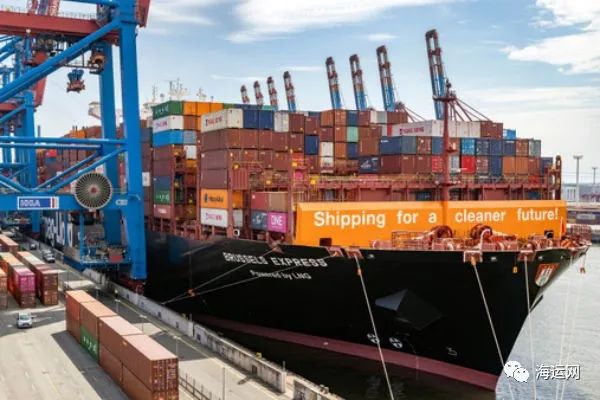
Container ships — currently the most common mode of transport, available in three container sizes: 20', 40', and 45'. The capacity of container ships varies greatly, ranging from as small as 85 TEU (twenty-foot equivalent units) to Evergreen's "Ever Ace," which has a maximum capacity of 23,992 TEU.
Bulk Carriers
Bulk carriers — used to transport commodities such as wheat, sulfur, iron ore, and coal.
General Cargo Ship
General Cargo Ship — Used to transport a variety of other cargoes, such as packaged goods (cement, sugar, etc.), palletized cargo (oil & gas, chemicals, etc.), timber, and more.
RoRo Ship
RoRo Ship — Also known as a Roll-on/Roll-off vessel, as the name suggests, it is used to transport wheeled cargo such as cars, buses, trucks, and construction vehicles. It can be further classified into PCC (Pure Car Carrier) or PCTC (Pure Car and Truck Carrier), whose names also indicate their purpose.
Multipurpose Vessel
Multi-purpose Vessels — designed to carry a combination of the above cargoes. Highly versatile and popular ships, especially on certain routes where there are no shore-based handling facilities and self-sustaining vessels are required.
 
Tanker Vessels

Tanker Vessels — used for transporting various liquid cargoes, such as oil, liquid chemicals, etc.

Crude Oil Tankers
Crude Oil Tankers — used for transporting crude oil, further classified into VLCCs (Very Large Crude Carriers) and ULCCs (Ultra Large Crude Carriers), with the former ranging from 200,000 to 300,000 DWT and the latter from 300,000 to 500,000 DWT.
\n\n
\n
\n
\n
\n
LNG Carrier
\n
\n
\n
\n
\n\n
LNG Carrier – Used for transporting liquefied natural gas.
\n\n
\n
\n
\n
\n
Reefer Vessel
\n
\n\n
Reefer Vessel – Used for transporting frozen cargo or goods requiring temperature control, such as fruit, meat, fish, etc.
\n
\n
\n
\n
\n
\n\n


\n
\n
\n\n
 
\n
\n
\n
\n
\n
\n
\n
\n\n


\n